

2026 Economic Outlook: A CFO’s Perspective



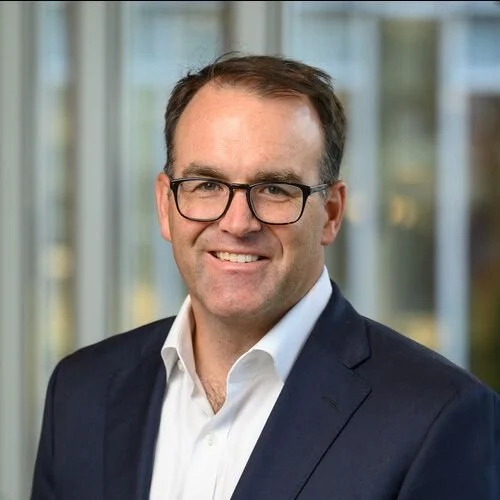
Dr. Jerry Parrish Blake Longstaff Alex Munhoz Scott LeTourneau
Chief Economist SVP & CFO CFO EVP & CFO
Metro Atlanta Chamber IHG Hotels & Resorts Mohawk Group Cox Automotive
EXECUTIVE SUMMARY
The Q1 2026 CFO Forum brought together senior finance leaders from hospitality, manufacturing, and automotive to discuss the economic environment. The consensus: cautious optimism, with tariff uncertainty and fiscal policy remaining the dominant headwind.
AI is reshaping operations across all three industries, consumer affordability is the key constraint in the auto sector, and the Southeast — particularly Metro Atlanta — continues to outperform as a growth market. Panelists emphasized the importance of agile forecasting, diversified supply chains, and disciplined AI governance.
1 . Tariff Uncertainty Demands Supply Chain Flexibility
Companies with diversified, localized supply chains are significantly better positioned than those reliant on imports.
Mohawk Group has intentionally built local manufacturing for local markets. Most products sold in the US are manufactured in the US, providing a competitive advantage over import-dependent competitors. (Alex Munhoz)
Cox Automotive has limited direct tariff exposure as a technology and services company, but sees clear downstream effects: higher vehicle prices, OEM supply constraints, and consumer affordability pressure. (Scott LeTourneau)
Dr. Parrish cautioned that tariff policy remains fluid — the Supreme Court struck down the current emergency tariffs, but the administration is pursuing permanent legislation. He recommended stress testing at +/- 20% from current rates.
2. Consumer Affordability Is the Economic Ceiling
Across industries, consumer and business affordability is the binding constraint — not demand.
Auto sector: New car prices rose from pre-COVID high-$30Ks to ~$50K; used cars from ~$14K to ~$20K. OEMs have responded to tariffs by de-featuring vehicles to keep price increases at ~$2K instead of ~$5K. Tax refunds in 2026 are 25% higher than 2025, providing a temporary demand boost, but a hangover is expected. (Scott LeTourneau)
Hospitality: Hotel owners face compounding cost pressures. New hotel development has changed. Pre-COVID, conversions represented ~20–25% of new deals; today they account for roughly 50–60%, reflecting a shift away from ground-up development and focus on optimizing existing assets. (Blake Longstaff)
Commercial flooring: Class A and B office real estate remains strong, though some areas of corporate real estate are experiencing slower growth. Nevertheless, there continue to be significant opportunities for expansion in hospitality, healthcare, data centers, and education sectors. (Alex Munhoz)
3. AI Is Delivering Real Business Impact — Now
AI has moved beyond experimentation into measurable productivity gains and revenue enablement across all three companies.
IHG Hotels & Resorts
Launched a new AI-powered revenue management system (with Atlanta-based Revenue Analytics) enabling real-time pricing efficiencies and optimization.
Investing in a content management platform to structure hotel data for AI-driven search (ChatGPT, Google AI Overviews)
Hired a dedicated AI leader (from McDonald’s/Google) and formed a cross-functional AI committee.
Cox Automotive
Enhancing Autotrader with AI-powered natural language search.
Launched virtual agent CRM features — dealers get more capability.
Developer productivity has changed dramatically — more AI agents, humans in the loop. Finance teams using Microsoft Copilot and Claude report “a massive change in what they can do.”
Strict data governance: approved tools only, controlled data flows, walled garden around confidential information, but experimentation is democratized.
Mohawk Group
AI-driven data center construction offers substantial growth potential for building product companies, and Mohawk Group has made a promising start with its specialized flooring solutions.
4. Macro Outlook Improved, But Forecasting Must Be Agile
Economic fundamentals have improved since fall 2025, but the speed of policy change demands a new approach to financial planning.
GDP improvement partially attributed to massive AI-related capital investment — economists estimate roughly a third of 2026 US GDP growth is connected to data center and AI infrastructure spending.
IHG shifted from three major annual forecasts to two major + multiple nimble short-cycle forecasts focused on “the three or four things that really move the needle.”
Dr. Parrish cautioned that economic data should be taken with “a grain of salt” due to lingering data gaps from the government shutdown.
5. The Labor Market Is in Transition
Job growth has slowed significantly, driven by uncertainty and early AI displacement effects.
The US created only ~181,000 net new jobs in the past year vs. the ~2 million annual pace considered healthy.
Dr. Parrish attributes the shortfall primarily to hiring uncertainty and delayed retirements from 2020–2021 now materializing, plus early AI substitution at the entry level.
Corporate structure may shift from a pyramid to a diamond shape — AI replacing entry-level positions, raising concerns about how employees gain experience to advance into management.
Skilled trades are seeing enormous demand.
6. Capital Markets Remain Accessible, Debt Discipline Matters
Despite $38.5 trillion in US sovereign debt, corporate credit markets are healthy — especially for proven, asset-backed borrowers.
Cox Automotive continues to issue capital through securitized lending programs for its floorplan lending business, recently achieving some of the tightest spreads in its history.
IHG invests only a small portion of capital (“key money”) to support billions of dollars in hotel real estate value entering their system — the asset-light franchise model insulates them from direct interest rate pressure, but a focus on supporting owners.
Digital assets/stablecoins: All three panelists confirmed they are not currently using stablecoins or digital assets in treasury operations.
7. The Southeast Continues to Outperform
Georgia and the broader Sun Belt remain among the strongest markets in the US.
Atlanta is the #5 MSA nationally for hotel supply and #3 for pipeline (future hotel development), signaling strong long-term confidence. (Blake Longstaff)
The data center boom is creating outsized demand for construction and building materials across the Southeast and Texas. (Alex Munhoz)
Cox Automotive has found Atlanta’s talent pool — diverse backgrounds, strong university pipeline — a significant advantage for growth.
Dr. Parrish’s forecast: Both Georgia and Metro Atlanta will have a better year in 2026 than 2025. Private capital on the sidelines is beginning to deploy.